
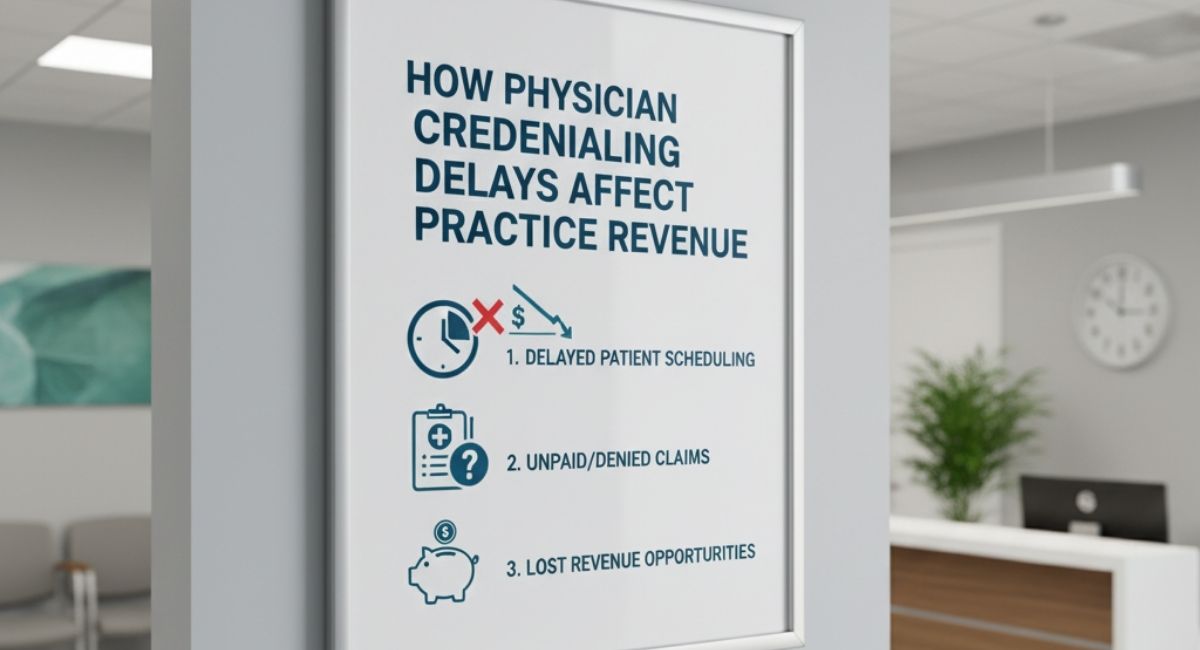
Managing a healthcare practice involves multiple moving parts, and one of the most critical yet often overlooked aspects is the credentialing process for physicians. Delays in this process can have significant implications for revenue generation, patient access, and overall operational efficiency. If you want to understand how these delays impact your practice and what steps can minimize them, this guide will provide a detailed walkthrough. For practices exploring solutions, integrating services like credentialing or medical billing can greatly reduce administrative bottlenecks and support smoother provider enrollment.
Understanding Physician Credentialing and Provider Enrollment
Physician credentialing is the process of verifying a healthcare provider’s qualifications, licenses, certifications, and experience. This verification ensures that providers meet the requirements set by insurance companies, hospitals, and regulatory bodies. While essential for compliance and patient safety, the credentialing process can be slow and prone to errors, leading to physician credentialing delays.
Provider enrollment issues often occur when there are incomplete applications, missing documentation, or mismatches in provider information. These delays not only postpone a physician’s ability to see patients but also affect revenue streams and operational workflows.
| Step in Credentialing | Typical Duration | Common Delay Cause | Impact on Revenue |
| Application Submission | 1-2 weeks | Missing documents | Initial billing cannot start |
| Verification of Credentials | 2-6 weeks | License or certification checks | Physician not cleared for patient visits |
| Insurance Panel Approval | 4-8 weeks | Slow insurer processing | Revenue loss from denied claims |
| Contract Finalization | 1-3 weeks | Delayed signature | Delayed reimbursement for services |
Even a delay of a few weeks can accumulate into thousands of dollars in lost revenue, especially for specialty practices with higher reimbursement rates.
Revenue Implications of Credentialing Delays
When a provider cannot see patients due to credentialing issues, the financial impact is immediate. Practices often experience:
- Lost patient appointments
- Delayed insurance reimbursements
- Increased administrative costs
- Lower overall productivity
For example, a cardiology practice relying on cardiology billing could lose significant revenue if a new provider cannot be enrolled on time. Similarly, smaller practices with limited staff may face compounding delays in scheduling and claims processing, impacting monthly cash flow.
How Delays Affect Cash Flow
Physician credentialing delays interrupt the revenue cycle in several ways:
- Missed Billable Services – Providers cannot submit claims until credentialed.
- Denied or Rejected Claims – Incorrect or incomplete enrollment leads to claim denials.
- Extended Accounts Receivable – Delays in claim submission increase the time for payment collection.
- Increased Operational Costs – Staff must spend additional time following up with insurers and correcting errors.
A practice relying on AR recovery services can mitigate some of the financial impact, but addressing credentialing delays at the source remains the most effective solution.
Strategies to Minimize Credentialing Delays
Reducing physician credentialing delays requires a structured approach:
- Standardize Documentation – Maintain a central repository of licenses, certifications, and education records.
- Regularly Update Provider Information – Ensure all personal and professional information matches across insurers.
- Use Credentialing Management Tools – Leverage platforms to track application status and send automated reminders.
- Outsource Credentialing – Partner with a professional credentialing service to handle applications and follow-ups efficiently.
Practices can also benefit from integrating services such as medical coding to ensure claims are prepared accurately once credentialing is complete, further smoothing the revenue cycle.
Checklist for Efficient Credentialing
- Verify licenses and board certifications are current
- Ensure malpractice insurance is valid
- Confirm provider enrollment applications are complete
- Track all submissions and insurer communications
- Keep copies of all supporting documents
Following these steps can drastically reduce the risk of provider enrollment issues and prevent costly delays.
How Credentialing Delays Impact Different Specialties
Different medical specialties face unique challenges when it comes to credentialing delays. For instance, specialties with higher reimbursement rates like cardiology or neurology often experience larger financial losses during delays. A comparative illustration is shown below:
| Specialty | Average Delay Duration | Revenue Impact per Week | Recommended Action |
| Cardiology | 6-8 weeks | $12,000-$20,000 | Outsource credentialing for efficiency |
| Pediatrics | 4-6 weeks | $5,000-$8,000 | Maintain updated licensing records |
| Dermatology | 3-5 weeks | $3,000-$6,000 | Use tracking software for insurer communication |
| Pain Management | 5-7 weeks | $10,000-$15,000 | Coordinate with medical billing teams |
Specialty-specific billing and credentialing coordination ensures that revenue losses are minimized even when delays occur. Linking credentialing with specialties billing can help align administrative and financial processes for better results.
Administrative and Operational Challenges
Beyond revenue, credentialing delays introduce operational challenges:
- Scheduling difficulties for patients
- Overburdened administrative staff
- Increased likelihood of errors in claims submission
- Strained relationships with insurance providers
Effective management involves not only tracking provider applications but also educating staff about timelines and documentation requirements. Practices integrating monthly billing audits alongside credentialing efforts can detect potential delays early and address them proactively.
Benefits of Outsourcing Credentialing
Outsourcing credentialing to specialized services provides tangible benefits:
- Faster provider enrollment and fewer errors
- Consistent tracking of multiple applications
- Reduced administrative burden on internal staff
- Improved revenue cycle efficiency
Outsourcing also allows practices to focus on patient care rather than administrative hurdles. By combining outsourcing with automated medical coding and billing solutions, the practice can maintain a smooth revenue stream even if internal resources are limited.
Manual Guide to Track and Resolve Credentialing Delays
A step-by-step approach to manage credentialing efficiently:
- Create a Credentialing Tracker – Include provider names, license numbers, submission dates, and insurer contacts.
- Document All Submissions – Keep copies of all applications, emails, and confirmations.
- Monitor Application Status Weekly – Follow up proactively with insurers.
- Coordinate with Billing Teams – Ensure claims preparation aligns with credentialing approvals.
- Review Denials Promptly – Address incomplete or rejected applications immediately.
| Task | Responsible Staff | Frequency | Status Tracking |
| Verify licenses | Office Manager | Monthly | Spreadsheet/Software |
| Submit enrollment | Credentialing Specialist | As Needed | Online portal |
| Follow up with insurers | Credentialing Coordinator | Weekly | Email/Calls |
| Update provider info | Administrative Staff | Quarterly | Internal Database |
Maintaining structured workflows reduces delays and ensures all claims are submitted without avoidable interruptions.
Trending FAQs
Q1: How long does physician credentialing usually take?
Typically, the process can take 60 to 120 days, depending on insurer responsiveness and completeness of documentation.
Q2: Can delayed credentialing affect patient access?
Yes, until a provider is credentialed, they may not be able to see patients under insurance plans, which can impact both care delivery and revenue.
Q3: What are the common causes of provider enrollment issues?
Incomplete applications, mismatched documentation, and slow insurer responses are the primary causes.
Q4: How can practices track credentialing efficiently?
Using tracking software or partnering with a professional credentialing service can simplify monitoring and reduce errors.
Q5: Is credentialing outsourcing cost-effective?
Yes, outsourcing reduces administrative workload, minimizes errors, and can prevent significant revenue losses due to delays.
Final Thoughts
Physician credentialing delays can have far-reaching consequences for healthcare practices, impacting revenue, patient access, and operational efficiency. By implementing structured workflows, using credentialing services, and integrating medical billing and coding processes, practices can mitigate the financial and administrative risks. For practices seeking comprehensive support, services like eBridgeRCM provide an integrated approach to credentialing, billing, and revenue cycle management to ensure smooth operations and sustained growth. Proper management of credentialing not only preserves revenue but also enhances the overall patient experience and practice reputation.