
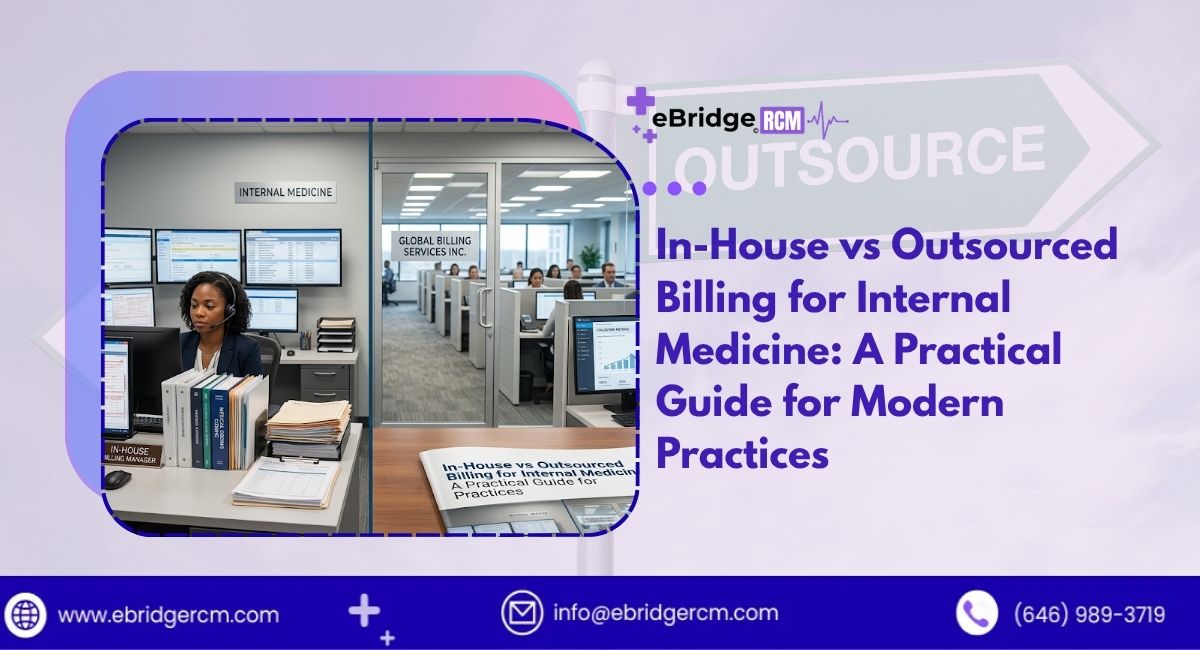
Choosing between in-house billing and outsourced billing for internal medicine is one of the most important operational decisions a practice can make. It affects revenue flow, staffing, compliance, and long-term growth. Many providers begin with internal billing but later reconsider when claim denials increase or administrative workload becomes difficult to manage.
If you are reviewing your current setup, it helps to look at broader billing strategies and performance indicators. This internal medicine billing guide provides a helpful foundation:
Internal Medicine Billing Guide explains how billing structures influence collections and efficiency.
This guide provides a detailed comparison of in-house vs outsourced billing for internal medicine, focusing on real-world workflows, costs, risks, and long-term impact. It is written to help physicians, administrators, and decision-makers evaluate what works best for their practice.
Understanding Internal Medicine Billing
Internal medicine billing is more detailed than many other specialties. It involves chronic care management, preventive visits, diagnostic coding, and frequent payer interactions. Billing teams must stay updated with coding changes, payer policies, and documentation requirements.
Common billing components in internal medicine include:
- Evaluation and management coding
- Chronic disease management billing
- Preventive care services
- Insurance verification and eligibility checks
- Prior authorizations
Even small errors in coding or documentation can lead to denials or delayed payments. This is why billing efficiency plays a direct role in practice profitability.
For example, issues like eligibility verification can create early-stage claim problems.
What Is In-House Billing
In-house billing refers to managing all billing operations within the practice using internal staff. This includes coding, claim submission, payment posting, and denial management.
Typical Structure of In-House Billing
- Billing manager or supervisor
- Medical coders
- Accounts receivable staff
- Front desk coordination
The practice owns the entire billing workflow and is responsible for hiring, training, and maintaining the team.
What Is Outsourced Billing
Outsourced billing involves partnering with a third-party company that manages billing tasks remotely. These companies specialize in revenue cycle management and often use advanced tools and experienced teams.
For practices considering this option, outsourced billing services provide structured support across the entire revenue cycle.
Core Differences Between In-House and Outsourced Billing
| Factor | In-House Billing | Outsourced Billing |
| Control | Full control | Shared control |
| Cost structure | Fixed salaries | Percentage-based fees |
| Expertise | Depends on staff | Access to specialists |
| Technology | Requires investment | Included in service |
| Scalability | Limited | Flexible |
Each model has advantages and limitations depending on practice size and goals.
Cost Analysis: What Practices Should Consider
Cost is often the first factor providers evaluate. However, comparing only salaries versus service fees does not provide a complete picture.
In-House Billing Costs
- Salaries and benefits
- Training and certification
- Billing software and updates
- Office space and equipment
- Employee turnover costs
Outsourced Billing Costs
- Percentage of collections or flat fee
- Setup and onboarding costs
- Contractual commitments
While outsourced billing appears more expensive at first glance, hidden costs in in-house billing often balance the difference.
Workflow Efficiency and Time Management
Time management is another key factor. In-house teams may struggle during peak periods or staff shortages.
Outsourced billing teams operate with structured workflows and dedicated departments for each stage of the revenue cycle.
Workflow Comparison
| Task | In-House Challenges | Outsourced Advantage |
| Claims submission | Delays due to workload | Faster processing |
| Denial management | Limited expertise | Specialized teams |
| Reporting | Manual effort | Automated dashboards |
Better workflow management often leads to faster reimbursements.
Impact on Revenue Cycle Performance
Revenue cycle performance depends heavily on billing accuracy and follow-up processes.
Practices with in-house billing often face:
- Higher denial rates
- Slower collections
- Limited reporting insights
Outsourced billing providers focus on improving key performance indicators. This article on billing KPIs explains how performance is measured:
Top Billing KPIs to Improve Internal Medicine Revenue
Staffing Challenges in In-House Billing
Hiring and retaining skilled billing staff is one of the biggest challenges for internal medicine practices.
Common Staffing Issues
- High turnover rates
- Ongoing training requirements
- Difficulty finding experienced coders
- Increased workload during staff shortages
Training is especially important. You can review best practices here: Internal medicine billing staff training
Outsourced billing removes these challenges by providing a ready team of professionals.
Technology and Software Requirements
Billing technology is constantly evolving. Practices must invest in:
- Practice management systems
- Clearinghouse integration
- Reporting tools
- Compliance updates
This can be costly and time-consuming.
Outsourced providers typically include advanced technology as part of their service. They also ensure system updates and compliance with payer requirements.
Compliance and Risk Management
Healthcare billing is highly regulated. Errors can lead to audits, penalties, or revenue loss.
Compliance Considerations
- HIPAA regulations
- Coding accuracy
- Documentation standards
- Timely claim submission
This resource explains compliance importance: Medical billing compliance checklist
Outsourced billing companies often have dedicated compliance teams, reducing risk for practices.
Denial Management and AR Recovery
Denial management is one of the most time-consuming aspects of billing.
In-house teams may lack the time or expertise to address denials effectively.
Outsourced billing providers focus on:
- Root cause analysis
- Timely follow-ups
- Appeals management
For practices dealing with frequent denials, AR recovery services can improve collections significantly.
Scalability and Growth
As practices grow, billing complexity increases.
In-house billing requires:
- Hiring more staff
- Expanding infrastructure
- Managing larger workloads
Outsourced billing offers scalability without increasing internal overhead.
Hybrid Billing Model: A Balanced Approach
Some practices choose a hybrid model, combining in-house and outsourced billing.
Hybrid Model Example
- Front-end tasks handled internally
- Back-end billing outsourced
This approach provides flexibility while maintaining some level of control.
Pros and Cons Summary
In-House Billing Advantages
- Direct control over processes
- Immediate access to staff
- Custom workflows
In-House Billing Limitations
- Higher operational costs
- Staffing challenges
- Limited scalability
Outsourced Billing Advantages
- Access to experienced professionals
- Reduced administrative burden
- Improved revenue performance
Outsourced Billing Limitations
- Less direct control
- Dependence on external partner
When In-House Billing Works Best
In-house billing may be suitable for:
- Small practices with low claim volume
- Providers who prefer direct oversight
- Practices with experienced billing teams
When Outsourced Billing Is the Better Choice
Outsourced billing is often beneficial for:
- Growing practices
- Multi-provider clinics
- Practices facing high denial rates
- Providers wanting to focus on patient care
Many practices also consider outsourcing when credentialing delays affect revenue. This article explains the impact: How Physician Credentialing Delays Affect Practice Revenue
Financial Impact Comparison
| Aspect | In-House | Outsourced |
| Initial cost | High | Moderate |
| Long-term cost | Variable | Predictable |
| Revenue growth | Limited | Higher potential |
| ROI | Depends on staff | Performance-driven |
How to Choose the Right Billing Model
Selecting the right model requires evaluating your practice’s needs.
Key Questions to Ask
- What is your current denial rate
- Do you have trained billing staff
- Are collections meeting expectations
- Can your team handle growth
Your answers will guide the decision.
Real-World Considerations for Internal Medicine Practices
Internal medicine practices face unique billing challenges such as chronic care coding and complex payer rules.
These factors often make outsourced billing more effective, especially when paired with specialty-focused services like Internal Medicine Billing.
Transitioning from In-House to Outsourced Billing
Switching billing models requires planning.
Transition Steps
- Evaluate current performance
- Select a reliable billing partner
- Transfer data securely
- Monitor initial performance
Clear communication is essential during this phase.
Long-Term Strategy for Billing Success
Billing is not just an administrative task. It is a long-term strategy that affects financial stability.
Practices that invest in efficient billing systems often see:
- Improved cash flow
- Reduced administrative stress
- Better patient satisfaction
Final Thoughts
The decision between in-house vs outsourced billing for internal medicine depends on your practice size, goals, and available resources. While in-house billing offers control, outsourced billing provides efficiency, expertise, and scalability.
If your practice is experiencing delays, denials, or staffing challenges, it may be time to consider professional support. Services like credentialing can also complement billing by ensuring providers are properly enrolled with payers.
For practices aiming to improve revenue performance and reduce administrative burden, working with an experienced partner like eBridge RCM LLC can provide consistent results across the entire revenue cycle.