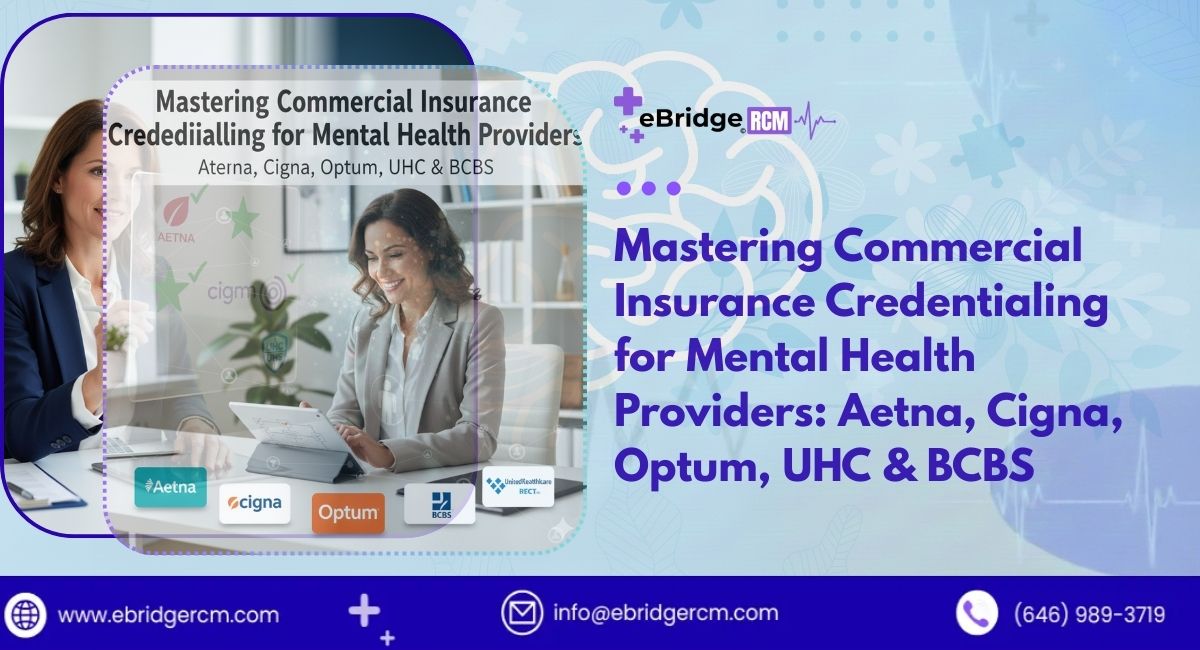
Navigating insurance credentialing for mental health providers can be daunting, particularly when managing multiple commercial payers. Credentialing is not only about meeting requirements but also about ensuring your practice can receive timely reimbursements and build trust with patients. This guide offers a detailed, practical approach to credentialing with Aetna, Cigna, Optum, UnitedHealthcare, and Blue Cross Blue Shield (BCBS), along with strategies to streamline the process and integrate it with your practice management systems.
Understanding Insurance Credentialing for Mental Health Providers
Insurance credentialing confirms that a provider meets the standards set by insurance companies to offer reimbursable services. For mental health providers, this involves verifying education, licensure, certifications, work history, and professional experience. Credentialed providers gain access to in-network benefits, which increases patient trust and ensures consistent revenue.
Benefits of Credentialing
- Direct participation in insurance panels and faster reimbursement
- Improved patient confidence in the practice
- Reduced claim denials due to verification errors
- Compliance with payer and state regulations
- Better integration with billing and EMR systems
Credentialing is particularly important in mental health due to variations in coverage for psychotherapy, counseling, and psychiatric evaluations. Understanding payer-specific requirements can prevent delays and ensure smooth operations.
Preparing Your Practice for Credentialing
Before beginning applications, providers should ensure they have all necessary documentation and processes in place.
Key Preparation Steps:
- Verify Licenses and Certifications: Ensure all state licenses, federal registrations, and board certifications are current.
- Gather Documentation: Collect diplomas, malpractice insurance, DEA registration if required, and professional references.
- Understand Payer Requirements: Review each insurer’s provider manual to know exactly what is needed.
- Update CAQH Profile: Many insurers use CAQH ProView to streamline credentialing. Accurate, up-to-date profiles prevent delays. Our Credentialing Services for Internal Medicine Providers demonstrate how comprehensive documentation streamlines approvals.
Application Process for Major Insurers
Credentialing steps are similar across Aetna, Cigna, Optum, UnitedHealthcare, and BCBS, though each has unique portal requirements and timelines.
| Insurer | Application Platform | Average Processing Time | Key Considerations |
| Aetna | CAQH ProView / Aetna Portal | 60-120 days | Ensure electronic submission with complete verification documents. |
| Cigna | CAQH / Cigna Portal | 60-90 days | Specialty-specific documents and references are critical. |
| Optum | Optum Portal | 90-120 days | Background checks and state license verification are required. |
| UnitedHealthcare | CAQH / UHC Portal | 60-120 days | Recredentialing required every 2-3 years. |
| BCBS | BCBS State-Based Portals | 60-120 days | Some states have additional verification steps; confirm local requirements. |
Maintaining Accuracy During Submission
Errors can cause major delays. Providers should:
- Use the exact legal name on their license
- Verify NPI, taxonomy, and tax ID numbers
- Include up-to-date malpractice insurance and references
- Double-check every portal field for accuracy
Using EMR for small practice can help ensure your credentialing information is consistent across billing, scheduling, and claims systems. Accurate integration reduces claim rejections and streamlines reimbursement.
Common Challenges and How to Address Them
- Incomplete Documentation: Double-check that licenses, certifications, and references are included.
- Reference Delays: Notify references in advance and provide clear instructions.
- Portal Navigation Issues: Each payer portal may differ; take time to learn each or seek professional support.
- Re-Credentialing: Keep records for periodic re-credentialing to avoid lapses.
Integrating Credentialing with Practice Management
Credentialing should align with billing, EMR, and claims management. For instance, linking credentialed provider status with your practice’s billing ensures accurate claim submissions. Our EMR Integration Services demonstrate how keeping credentialing data updated prevents billing errors and claim denials. Additionally, leveraging professional medical billing services in California can streamline revenue cycle management.
Tips for Efficient Credentialing
- Begin early: Credentialing can take 2-4 months; plan ahead
- Track all applications: Use a spreadsheet or system to record submissions, contacts, and follow-ups
- Consider professional services: Outsourced credentialing reduces errors and saves time
- Stay informed: Monitor payer updates and regulatory changes
Insurance Enrollment and Revenue Impact
Proper insurance enrollment allows mental health providers to be reimbursed accurately for services. Credentialed providers can bill at in-network rates, whereas uncredentialed providers may face out-of-network penalties or claim denials. Credentialing ensures smoother financial operations and helps avoid revenue loss.
Credentialing Checklist
| Step | Action Item |
| 1 | Verify all licenses and certifications |
| 2 | Complete and update CAQH profile |
| 3 | Prepare specialty-specific documents |
| 4 | Submit applications to payer portals |
| 5 | Track references and background checks |
| 6 | Follow up regularly until approval |
| 7 | Maintain records for re-credentialing |
Advanced Strategies
- Template Documentation: Create reusable templates for letters of reference, prior work experience, and malpractice verification.
- Batch Submission: For practices enrolling with multiple insurers, batch submissions reduce errors.
- Professional Services: Credentialing services can manage submissions and communicate with insurers, reducing administrative workload.
- Continuous Learning: Participate in webinars or workshops to stay updated on best practices.
Supporting Your Practice Beyond Credentialing
Credentialing should be part of a larger revenue cycle management strategy. Integrating credentialing with billing, claims, and audits ensures efficiency. Our Revenue Cycle Tips for Mental Health Providers show how proper credentialing positively affects reimbursement and practice sustainability.
Final Thoughts
Mastering insurance credentialing for mental health providers involves organization, attention to detail, and proactive follow-up. By preparing documents thoroughly, understanding each payer’s requirements, and tracking applications consistently, providers can secure network access and maintain steady revenue. Professional support, such as our Mental Health Billing Services, can simplify the process and improve outcomes.
Helpful Resources
- Medical Credentialing Mistakes to Avoid
- CAQH Credentialing for Mental Health Providers
- Re-credentialing & Revalidation Guide
- Top Outsourced Medical Billing Companies in New York
For comprehensive support with insurance credentialing and related services, eBridge RCM LLC provides professional assistance to mental health providers, ensuring smooth insurance enrollment, accurate claims processing, and optimized practice revenue. Using EMR for small practice and leveraging medical billing services in California can further enhance efficiency and financial stability.