
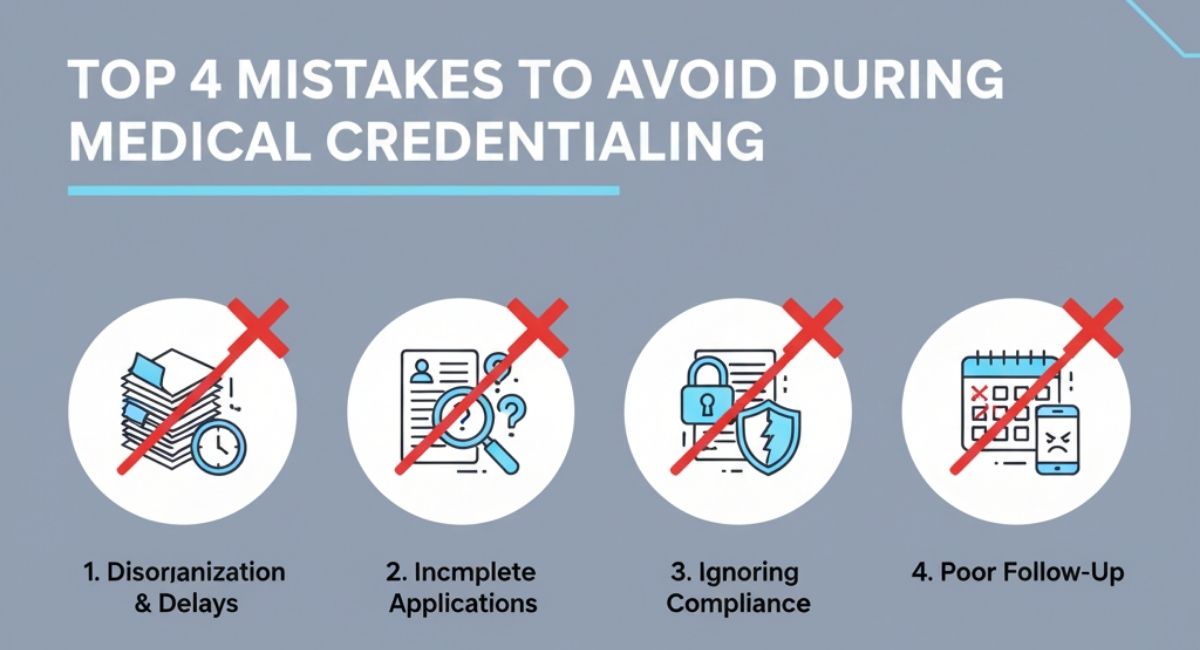
Medical credentialing is a process that confirms a healthcare provider’s qualifications, ensuring they meet payer standards for participation in insurance networks. This step is vital for reimbursement, patient trust, and compliance. Yet, it is one of the most error-prone areas of revenue cycle management. A single overlooked detail can hold up approvals, delay payments, or even block a provider from seeing patients under certain plans.
The reality is that many practices underestimate how complex credentialing can be. Applications involve multiple payers, extensive documentation, and constant follow-up. When errors occur, the process stalls, causing unnecessary financial strain. Practices that integrate credentialing with medical billing and payer enrollment workflows have a much smoother experience and avoid preventable disruptions.
This guide takes you through the most frequent credentialing errors, explains why they happen, and offers practical, actionable ways to avoid them. It also provides a structured approach to building an efficient credentialing workflow so your providers are approved on time and claims are reimbursed without interruption.
Why Medical Credentialing Cannot Be Treated as an Afterthought
Credentialing verifies licenses, education, training, work history, and any disciplinary actions. Payers rely on this information to determine whether a provider is eligible to participate in their network. If there’s an error or missing information, payers do not simply move the application forward—they pause the process until everything is corrected.
These pauses have real financial consequences:
- Claims may not be payable for services rendered.
- Providers may not appear in insurance directories, affecting patient volume.
- Incorrect data can trigger audits or compliance inquiries.
Credentialing is not just a compliance requirement—it’s a revenue protection measure. By doing it right the first time, practices avoid revenue gaps and keep their operations steady.
Common Medical Credentialing Mistakes and How to Fix Them
1. Incomplete or Outdated Documentation
Missing details such as updated state licenses, DEA certifications, or malpractice coverage are common reasons applications are rejected. Even small discrepancies, like mismatched addresses on forms, can cause issues. Many practices also forget to update their CAQH profiles, which is the primary database payers use to verify provider data.
How to fix it:
- Keep a centralized digital library of all provider documents.
- Verify expiration dates and update records quarterly.
- Ensure CAQH profiles are accurate and attested at least every 120 days.
- Use credentialing specialists , our medical credentialing services help to double-check each submission.
2. Delayed or Missed Follow-Ups with Payers
Credentialing is not a “set it and forget it” process. Payers often request clarifications or additional documentation. If your staff doesn’t follow up, your application may sit idle for weeks or even months.
How to fix it:
- Assign a dedicated credentialing coordinator to track each application.
- Maintain a follow-up schedule—contact payers every 10 to 14 days.
- Document all communications with payer representatives to ensure nothing slips through the cracks.
3. Incorrect NPI or Taxonomy Codes
Provider NPIs must be accurately associated with specialty taxonomy codes. If these codes do not align with payer requirements, claims will be denied even after credentialing is approved.
How to fix it:
- Verify taxonomy codes for each provider’s specialty.
- Ensure that these codes are consistent across applications, billing platforms, and EHR systems.
- Update your billing and coding systems with correct information to prevent downstream errors.
4. Poor Internal Coordination
When credentialing is done in isolation, disconnected from billing, coding, or compliance teams, mistakes are harder to catch. One department may assume credentialing is complete while another is still waiting for confirmation, leading to service gaps.
How to fix it:
- Integrate credentialing into your revenue cycle management system.
- Use practice management software such as EHR Integration solutions to keep provider data aligned across departments.
- Hold regular meetings to review credentialing status, especially when onboarding new providers.
Building an Efficient Credentialing Workflow
A structured credentialing process ensures nothing is missed. This checklist can help your team stay organized:
| Step | Frequent Error | Corrective Measure |
| Collect Provider Data | Incomplete or missing documents | Verify all licenses, CV, malpractice insurance before application |
| Verify CAQH Profile | Outdated or inconsistent data | Update quarterly and match payer application details |
| Submit Applications | Using wrong forms or codes | Confirm payer requirements and taxonomy codes in advance |
| Track Status | No proactive follow-up | Set reminders to contact payers every 10–14 days |
| Respond to Requests | Slow or no response to payers | Assign staff or vendor to monitor communication |
| Confirm Approval | Failing to update internal systems | Sync provider data with billing and coding platforms |
By implementing this kind of workflow, practices avoid missed deadlines, unnecessary delays, and administrative headaches.
Credentialing and Revenue Cycle: Why They Must Work Together
Credentialing is a front-end process that impacts back-end revenue. If payer enrollment is delayed, claims are not reimbursed, creating cash-flow issues. Providers who are not credentialed properly risk having to write off claims entirely or pursue lengthy AR recovery efforts.
When credentialing data is synchronized with billing and coding teams, every claim goes out clean from day one. This reduces denials and accelerates payment cycles. Practices that use integrated systems and specialized credentialing experts avoid the most damaging errors.
Practical Tips for Staying Ahead of Credentialing Delays
- Keep all provider records up to date: Review licenses, malpractice coverage, and hospital privileges every six months.
- Maintain a credentialing log: Track submission dates, follow-ups, and approvals for every provider.
- Audit credentialing files internally: Similar to monthly billing audits, these reviews help you spot issues early.
- Communicate across departments: Ensure billing and credentialing teams are aligned on payer network changes.
- Consider outsourcing if needed: Credentialing specialists with payer relationships often complete enrollment faster than in-house teams with limited bandwidth.
Additional Insights on Payer Enrollment
Payer enrollment isn’t just a one-time task when onboarding new providers. It must be actively managed over time:
- When providers change practice locations, enrollments must be updated with every payer.
- Adding new specialties or service lines requires new payer applications and approvals.
- Even established practices need to re-credential periodically as payers refresh their provider rosters.
Many credentialing errors happen during these updates. A structured approach helps prevent lapses in coverage and unexpected payment interruptions.
FAQs About Medical Credentialing
1. How long does credentialing usually take?
Most payer approvals take 60–120 days, though timelines vary. The process is faster when applications are accurate, complete, and actively monitored.
2. What happens if my application is rejected?
Rejections typically result from missing or incorrect information. Once corrected, applications can be resubmitted, but this causes additional delays.
3. Can I bill for services before credentialing is complete?
You can provide services, but insurers may not pay until approval is finalized. Some practices choose to hold claims until credentialing is confirmed to avoid unpaid balances.
4. How often should I update my CAQH profile?
CAQH should be updated and attested at least every 120 days. Regular updates prevent processing delays with payers.
5. Is outsourcing credentialing worth it?
For practices with high provider turnover or limited administrative staff, outsourcing saves significant time and reduces errors. Vendors familiar with payer processes usually move applications forward faster.
Final Thoughts
Medical credentialing mistakes, whether small or significant, have real consequences for both providers and patients. Incomplete documents, outdated CAQH profiles, poor follow-up, and incorrect payer enrollment data can all stall reimbursements. A well-organized process combined with expert oversight prevents these issues and ensures a smooth revenue cycle.
Working with a trusted partner like eBridgeRCM allows practices to focus on patient care while ensuring that credentialing and billing processes are handled correctly and on time. Credentialing is not just a formality—it is an essential part of keeping your practice financially healthy and operationally efficient.