
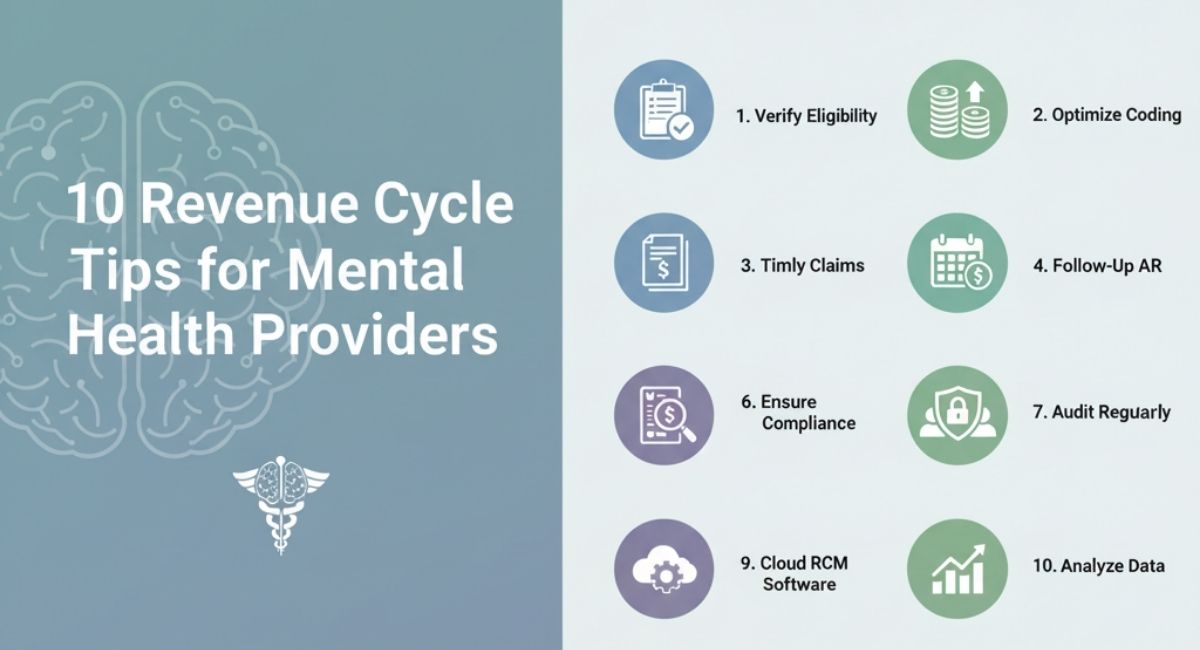
Managing a mental health practice involves more than providing high-quality therapy and counseling services. One of the most significant challenges for mental health providers is maintaining a healthy revenue cycle while navigating insurance reimbursement, claims submission, and patient billing. Efficient management of behavioral health reimbursement and therapy claims can make a considerable difference in your practice’s financial stability. For those exploring resources, such as Mental Health Billing Services or Medical Billing can provide essential support and guidance.
This guide offers a comprehensive manual to optimize the revenue cycle for mental health providers, focusing on practical tips, actionable steps, and strategies that can improve revenue flow and reduce claim denials.
Understanding the Revenue Cycle in Mental Health Care
The revenue cycle refers to the process from patient intake to the final payment collection. For mental health practices, this includes:
- Scheduling and pre-authorization
- Insurance verification
- Therapy claims submission
- Coding and billing
- Payment posting and reconciliation
- Accounts receivable (AR) follow-up
Inefficiencies in any step can delay payments or result in denials, impacting cash flow. Providers need a structured approach to streamline these processes.
Key Components of a Mental Health Revenue Cycle
| Component | Description | Common Challenges | Tips |
| Patient Intake | Collecting patient information, insurance, and consent forms | Missing data, incomplete insurance info | Verify insurance eligibility at the first point of contact |
| Pre-authorization | Confirming coverage for therapy sessions | Delays in approval | Use automated tools to submit requests and track approvals |
| Coding | Assigning proper CPT and ICD codes | Incorrect or outdated codes | Regularly update your coding knowledge; consider Medical Coding support |
| Claims Submission | Sending claims to insurance providers | Rejections due to errors | Ensure claims are accurate and include all necessary documentation |
| Payment Posting | Recording payments from patients and insurance | Posting delays or errors | Reconcile payments daily to prevent errors |
| AR Recovery | Following up on unpaid or denied claims | High AR days | Implement structured follow-up protocols or outsource to AR Recovery services |
Tips to Improve Mental Health Billing Efficiency
Efficient billing not only ensures timely revenue but also allows providers to focus on patient care. Here are key strategies for mental health providers:
1. Verify Insurance Before the Session
Insurance verification is critical to prevent denials. Confirm:
- Coverage for therapy sessions
- Deductibles, copays, and coinsurance
- Prior authorization requirements
Using digital verification tools can minimize errors and reduce administrative burden.
2. Maintain Accurate and Detailed Documentation
Proper documentation ensures that therapy claims are reimbursed correctly. Include:
- Session notes with clear treatment objectives
- Diagnosis codes matching patient conditions
- Therapy duration and type of session
Detailed documentation supports claims in case of audits and disputes.
3. Use Correct CPT and ICD Codes
Accurate coding is essential for behavioral health reimbursement. Common therapy codes include:
| Therapy Type | CPT Codes | Notes |
| Individual Therapy | 90837, 90834 | Duration-based coding; document time precisely |
| Group Therapy | 90853 | Ensure all participants are recorded |
| Family Therapy | 90846, 90847 | Differentiate with patient involvement |
| Telehealth Sessions | 90791 with modifier 95 | Confirm payer allows telehealth reimbursement |
Errors in coding are a leading cause of claim rejections, so ongoing training or assistance from coding specialists is beneficial.
4. Streamline Claims Submission
Manual claims submission can be prone to mistakes. Consider:
- Electronic claims submission
- Integrating EHR with billing systems for automated data transfer
- Clearinghouse solutions for faster processing, like Clearing House Solutions
Automation reduces human error and speeds up reimbursements.
5. Conduct Regular Billing Audits
Routine audits identify errors before they become larger issues. Focus on:
- Missing or incorrect patient information
- Duplicate or rejected claims
- Coding mismatches
Monthly audits, such as Monthly Billing Audit, help maintain revenue integrity.
6. Track Accounts Receivable
Monitoring AR days ensures that payments are collected promptly. Key practices:
- Follow up within 30-45 days for unpaid claims
- Prioritize high-value claims for faster resolution
- Use structured AR recovery systems
Tracking AR also provides insight into your practice’s financial health.
7. Credentialing with Insurance Providers
Credentialing ensures you are recognized by insurers to receive reimbursement. Missing credentials delay payments and limit patient access. Steps include:
- Completing provider applications accurately
- Submitting required documentation promptly
- Monitoring application status
Outsourcing credentialing to experts like Credentialing services can save time and prevent denials.
8. Optimize Patient Billing Communication
Transparent communication about copays, deductibles, and payment plans improves collection rates. Tips include:
- Sending clear invoices promptly
- Offering multiple payment options
- Setting reminders for upcoming payments
Clear communication reduces confusion and late payments.
9. Leverage Technology for Workflow Efficiency
Modern practices benefit from practice management software. Consider solutions for:
- EHR integration to automate claims data
- Scheduling and reminders to reduce no-shows
- Cloud-based RCM for secure data management, such as Cloud RCM
Integrating technology streamlines operations and allows staff to focus on patient care.
10. Educate Staff Continuously
Staff involved in billing and revenue cycle management should stay updated on:
- Coding changes
- Payer policies
- New therapy billing guidelines
Regular training reduces errors and enhances efficiency.
Common Challenges in Mental Health Revenue Cycle
Mental health providers often face unique challenges that impact revenue:
- Delayed payments due to pre-authorization or verification issues
- Frequent claim denials from coding errors
- Lack of documentation supporting therapy claims
- High administrative burden on small practices
Recognizing these challenges allows providers to implement preventive measures and utilize services that support the revenue cycle.
Example Workflow for Efficient Billing
| Step | Action | Responsible Party | Tools/Resources |
| Intake | Collect patient info, insurance | Front desk staff | Practice software |
| Verification | Confirm coverage and authorization | Billing team | EHR integration |
| Documentation | Record therapy notes | Clinician | EHR system |
| Coding | Assign CPT/ICD codes | Coding specialist | Medical coding guidelines |
| Claim Submission | Submit electronically | Billing team | Clearing house solutions |
| Payment Posting | Reconcile payments | Accounting staff | Accounting software |
| Follow-up | AR recovery for unpaid claims | Billing team | AR Recovery service |
Following a structured workflow reduces errors and enhances behavioral health reimbursement.
Advanced Strategies for Improving Reimbursement
- Telehealth Optimization: Ensure all virtual sessions are coded and billed correctly to meet payer requirements.
- Bundled Billing Review: Analyze if multiple services can be billed together for efficiency.
- Denial Management System: Track trends in denials to address recurring issues proactively.
- Regular Performance Metrics: Monitor claim submission rates, denial percentages, and AR days for continuous improvement.
Trending FAQ’s for Mental Health Revenue Cycle
Q: How long does it usually take to get reimbursement for therapy claims?
A: The timeline varies depending on the insurance provider and accuracy of the claim. Typically, electronic claims take 7-14 days, while paper submissions may take up to 30 days. Ensuring correct coding and documentation can reduce delays.
Q: Can telehealth therapy sessions be billed the same as in-person sessions?
A: Many insurers reimburse telehealth therapy sessions, but the codes may differ, and some require a modifier. Always verify coverage and document session details properly.
Q: What are the most common reasons for claim denials in mental health?
A: Denials often result from incorrect coding, missing pre-authorization, incomplete documentation, or insurance coverage issues. Conducting regular audits and staff training helps prevent denials.
Q: Should small mental health practices outsource billing?
A: Outsourcing billing can improve accuracy, speed up reimbursements, and allow clinicians to focus on patient care. Services like Medical Billing or Medical Specialities Billing can provide structured support.
Q: How can I reduce AR days in my practice?
A: Verify insurance, submit claims promptly, follow up on unpaid claims, and leverage AR recovery services. Using digital tools and structured workflows also accelerates collections.
Final Thoughts
For mental health providers, efficient revenue cycle management is as important as patient care. From verifying insurance and coding therapy sessions correctly to optimizing claims submission and following up on AR, every step contributes to consistent cash flow. Leveraging technology, outsourcing certain services like Medical Coding, and conducting regular audits ensures that providers maximize behavioral health reimbursement while reducing administrative burden. Implementing these tips positions your practice for financial stability and allows more focus on delivering high-quality mental health care.
At eBridgeRCM LLC, we specialize in Mental Health Billing Services and Revenue Cycle Management tailored to behavioral health practices. Our expert team helps you streamline claims, reduce denials, and accelerate reimbursements—so you can spend more time with patients and less time on paperwork.
Ready to optimize your practice’s revenue cycle? Visit eBridgeRCM.com today to learn more about how our solutions can support your growth and financial health.