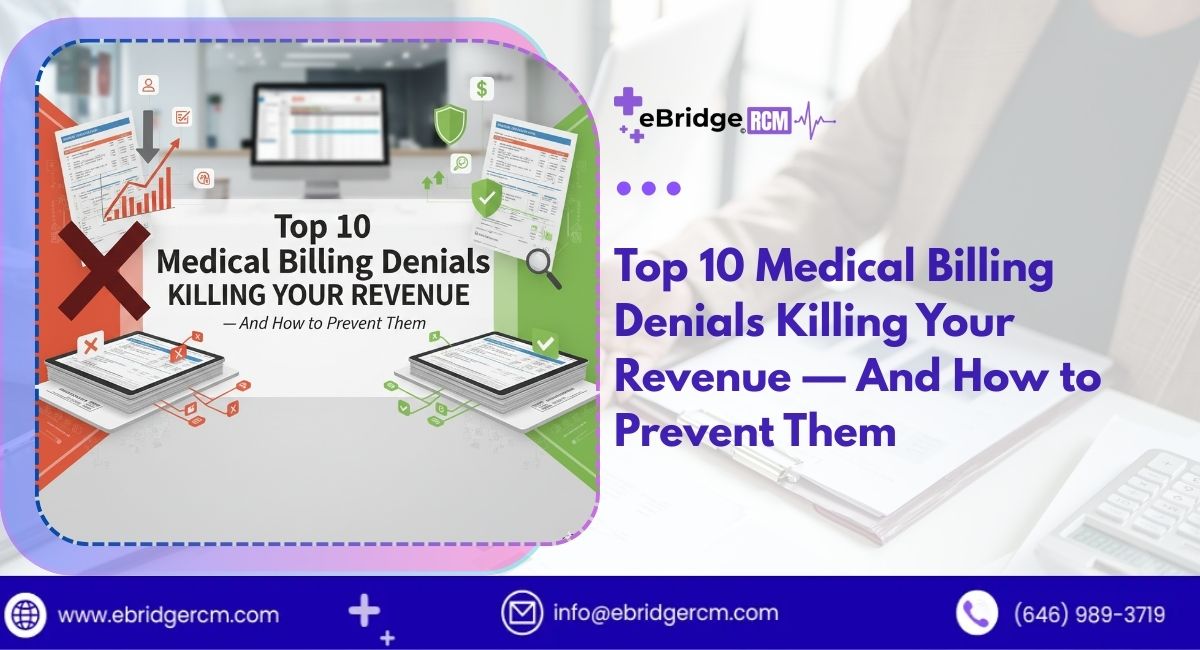
Medical billing denials are one of the most significant challenges healthcare practices face today. Every denial interrupts cash flow, increases administrative burden, and consumes valuable time that could be spent on patient care or practice growth. For small to mid-sized practices, even a few denied claims per week can add up to substantial lost revenue over time.
Understanding why denials happen and putting preventive measures in place is key to maintaining steady revenue. This guide dives into the ten most common medical billing denials, what causes them, and practical ways to prevent them from recurring. For practices considering support, our Cardiology RCM solutions offer tailored solutions to minimize errors and optimize claims submissions.
1. Missing or Incorrect Patient Information
One of the top reasons claims are denied is inaccurate or incomplete patient data. This can include wrong dates of birth, outdated addresses, or invalid insurance identifiers. Even small typos in a patient’s name or insurance number can lead to denials, creating a ripple effect on your cash flow.
Implementing verification checks during patient registration is critical. Asking front-desk staff to confirm information against the patient’s insurance card, and requiring complete demographic information in the EMR, significantly reduces errors.
Table: Common Patient Data Errors and How to Prevent Them
| Error | Cause | Prevention |
| Incorrect DOB | Data entry mistake | Verify during registration with insurance card |
| Invalid insurance ID | Patient gave old ID | Confirm eligibility before the visit |
| Missing contact info | Oversight | Implement mandatory EMR fields |
Practices that actively monitor patient data accuracy see fewer denials and improved first-pass claim acceptance rates.
2. Lack of Prior Authorization
Many insurance plans require pre-approval for certain procedures, tests, or surgeries. Without prior authorization, claims are automatically denied. This is especially common with advanced imaging, specialty lab work, and elective procedures.
Creating a workflow to verify authorization requirements before any service is rendered can prevent a significant portion of denials. Integrated EMR systems often provide alerts for services that require approval. Some practices even assign staff specifically to manage prior authorizations, ensuring no patient receives a procedure without proper coverage.
3. Coding Errors
Incorrect coding is another leading cause of denials. CPT, ICD-10, or HCPCS codes must accurately reflect the service provided. Using outdated codes, unbundled codes, or incorrect modifiers can trigger automatic rejection from payers.
Regular training and updates for your coding team are essential. Many practices use automated coding verification tools to flag errors before submission. Additionally, outsourcing to professional coding teams, like our Medical Coding Services, can reduce errors and ensure compliance with payer rules.
4. Duplicate Claims
Submitting the same claim more than once—whether due to software glitches or human error—can cause denials. Duplicate claims not only slow down revenue collection but may also trigger audits if they become frequent.
A practical prevention approach is to maintain a tracking system for submitted claims. EHR-integrated billing modules often include automated alerts for duplicate submissions. Consistently reviewing claim reports also helps identify accidental resubmissions before they reach the payer.
5. Coordination of Benefits (COB) Issues
Patients with multiple insurance policies often create confusion regarding the primary payer. If a claim is submitted to the wrong insurer first, it can be denied.
Collecting full insurance details and verifying which policy is primary before the patient visit is critical. Documenting COB procedures and maintaining clear communication with insurance companies prevents conflicts and delays. This is particularly important for practices managing Medicare and supplemental insurance claims.
6. Timely Filing Limits
Every insurance payer enforces deadlines for submitting claims. Missing these deadlines often results in permanent denials. Even a few days late can mean lost revenue.
Internal timelines and claim monitoring systems are essential. Practices can set up automated software alerts and monthly audits to ensure claims are submitted within the allowable limits. For further guidance, check out our article on the Timely Filing Limit for Insurance Claims.
7. Medical Necessity Denials
Insurance companies may reject claims if the procedure is not deemed medically necessary according to their policies. This is especially common with elective procedures, advanced imaging, or repeated services.
Supporting claims with clear documentation from the provider, including clinical notes and adherence to accepted guidelines, significantly reduces these denials. Ensuring your medical staff consistently documents the reason for each service is a preventive step that pays dividends.
8. Missing or Invalid Provider Information
Claims can be denied if provider identifiers are incorrect, such as NPI numbers, PTAN, or entity codes. Even a small mistake can result in rejections and payment delays.
Regularly verifying provider credentials and ensuring that billing and rendering providers are correctly listed is crucial. Credentialing services, like our Credentialing Services for Internal Medicine Providers, can help maintain accurate provider data across multiple payers.
9. Non-Covered Services
Some services may not be included in a patient’s insurance plan. Attempting to bill for them can lead to denials and unexpected patient billing issues.
Verifying coverage before scheduling the service and clearly communicating out-of-pocket responsibilities to patients prevents denied claims and patient dissatisfaction. Practices should maintain updated coverage policies and encourage patients to confirm benefits themselves.
10. Service Bundling or Unbundling Errors
Incorrectly bundling services or submitting unbundled codes is another frequent reason for denial. Payers often have strict guidelines for what procedures should be billed together.
Table: Common Bundling Errors and Correct Approaches
| Service | Common Error | Correct Approach |
| Lab panels | Billing each test separately | Use panel CPT code |
| Radiology | Charging individually for imaging + contrast | Apply bundled imaging code |
| Therapy sessions | Incorrect unit counts | Verify with payer guidelines |
Billing teams must regularly review payer-specific bundling rules to improve first-pass claim acceptance.
Prevention Strategies and Best Practices
Beyond addressing specific denial types, general strategies help minimize denials across the board:
- Conduct regular staff training on coding, documentation, and insurance policies.
- Implement pre-billing audits to catch errors before submission.
- Use integrated EMR and billing software for real-time validation.
- Maintain clear communication with insurance payers regarding policy updates.
- Outsource complex billing processes to experienced providers when necessary. For example, our Mental Health Billing Services in New York provide tailored solutions that reduce denials and accelerate revenue recovery.
Monitoring key performance indicators (KPIs) like denial rates, days in accounts receivable, and first-pass acceptance rates helps practices identify patterns and areas needing improvement. Scheduling monthly review sessions ensures continuous optimization of billing workflows.
Final Thoughts
Addressing the top 10 medical billing denials requires diligence, proper documentation, timely filing, accurate coding, and verification of both patient and provider information. Practices that implement preventive strategies see reduced denials, faster revenue cycles, and improved overall financial health. Utilizing professional billing, coding, and credentialing support, such as eBridge RCM LLC’s specialized services, ensures consistent claim acceptance and smoother revenue management.
For additional insights and resources:
- Audit Ready Practices to Stay Ahead of Payers
- Top Outsourced Medical Billing Companies in New York
- Revenue Cycle Tips for Mental Health Providers
- Benefits of Migrating to Cloud RCM Solutions
By combining proactive prevention, staff training, and specialized support, practices can reclaim lost revenue and spend more time focusing on quality patient care.