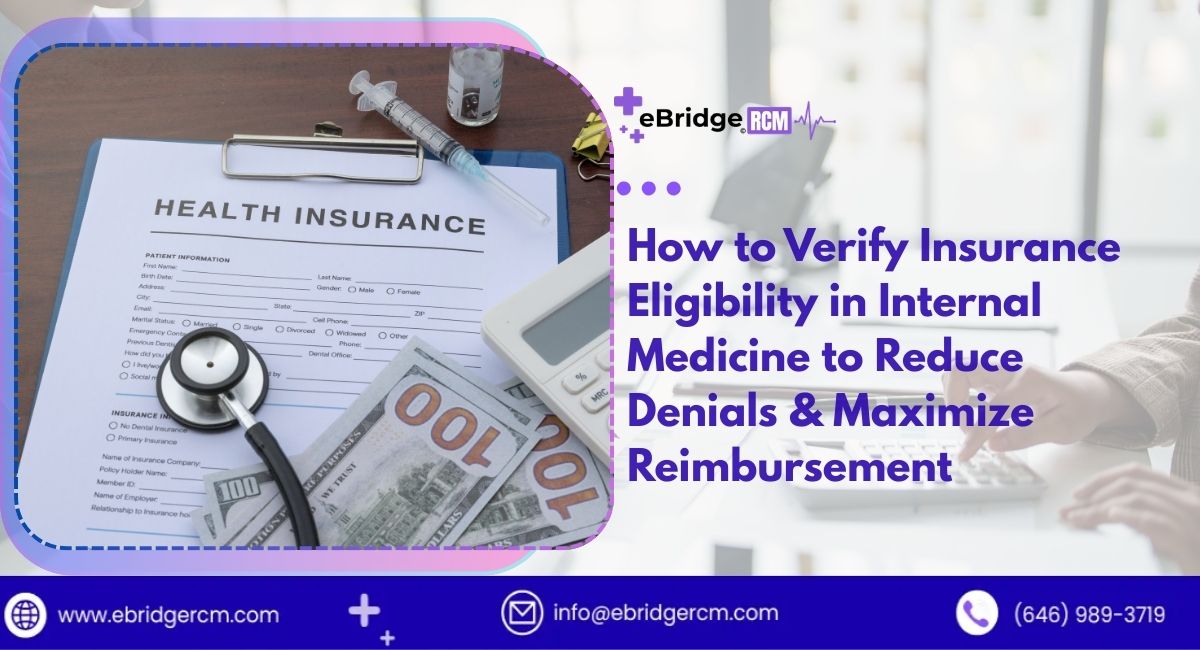
Verifying insurance eligibility for internal medicine providers is one of the foundational steps that directly influences the financial health of a practice. Without accurate eligibility verification, claims are at high risk of being denied, payments are delayed, and valuable time is wasted in appeals and corrections. In this comprehensive guide you will learn detailed procedures, best practices, responsibilities, common pitfalls, and how to set up a system that consistently reduces denials while improving revenue collection. In the early part of your internal billing process, and linked with our Credentialing Services for Internal Medicine Providers, accurate insurance checks make sure that your practice is paid fairly for services delivered.
Verification of insurance eligibility does more than confirm that a patient has coverage. It clarifies plan details, benefits, copayments, deductibles, referral requirements, and any authorization needs. This is especially important in internal medicine where patients may present with chronic conditions that require complex ongoing care. To maximize reimbursement, practices should approach eligibility verification as a step-by-step process supported by clear documentation and smart use of technology.
Why Insurance Verification Matters in Internal Medicine
Internal medicine practices manage a broad range of adult health issues. Patients may have multiple chronic conditions, require preventive services, and need coordinated care across specialists. Many of these visits involve procedural codes, laboratory services, and long-term care plans. Insurance coverage can vary widely by payer and by the type of service required. Understanding what a patient’s insurance covers before services are rendered helps prevent claim denials and ensures that providers are properly reimbursed.
In addition, payers regularly update policies and coverage criteria. These changes can affect patient copays, what services require prior authorization, and how referrals are managed. If a patient receives services that are not covered at the time of care due to outdated eligibility information, the provider could be left holding the financial responsibility. Practices in internal medicine that proactively verify eligibility notice fewer costly rework cycles and faster reimbursements from payers.
The Core Steps in Insurance Eligibility Verification
Insurance eligibility verification should be standardized in every internal medicine practice. Staff members, whether in front office, billing departments, or revenue cycle teams, should understand the complete verification workflow. Below is a comprehensive process that reduces ambiguity and supports internal medicine billing success.
- Collect Accurate Patient Information
Collecting patient demographics and insurance details accurately at the time of check-in or prior to visit is essential. Ask for insurance cards, and always confirm spelling of names, date of birth, policy ID number, and group number. Unfortunately, one small data entry error can lead to claim rejection before substantive review. - Use the Right Tools for Verification
A practice can verify eligibility through payer websites, clearinghouses, phone verifications, or electronic health record (EHR) portals. Electronic methods are generally faster and provide real-time responses. Effective integration between the practice management system and payer systems can reduce manual workload and improve accuracy. - Confirm Plan Benefits and Limitations
After confirming eligibility, identify what services are covered under the plan. Some plans differentiate between in-office visits, preventive screenings, lab services, imaging, and procedures. It is critical to verify whether services scheduled are within the covered benefits. - Verify Referral and Authorization Requirements
Many insurance plans, particularly HMOs and some Medicare Advantage plans, require referrals or prior authorizations for specialist consultations, imaging, or advanced procedures. If these requirements are overlooked, claims can be denied despite valid eligibility. - Document Eligibility Details in Patient Records
Documentation should include verification date, the name of the representative (if phone or portal interaction), coverage limits, and any notes about authorizations or referrals needed. These notes serve as an audit trail if issues arise later in billing review or appeal. - Update and Re-Verify Regularly
Insurance coverage can change between visits or when a policy renews. Best practices include re-verifying eligibility before each significant visit or service, especially for high-cost procedures or ancillary services.
Detailed Eligibility Verification Checklist
To help internal medicine practices standardize verification, the table below breaks down key points that must be checked and recorded for every patient encounter.
Table: Insurance Eligibility Verification Checklist
| Verification Item | What to Check | How to Document |
| Patient Demographics | Name, DOB, address, contact | Record in EHR and patient chart |
| Insurance Subscriber | Confirm if patient is primary or dependent | Enter subscriber name and relationship |
| Policy ID & Group # | Ensure accuracy of ID and group numbers | Scan insurance card photo & enter details |
| Coverage Dates | Eligibility effective and end dates | Note verification date with plan info |
| Plan Type | HMO, PPO, POS, Medicare, Medicaid | Record plan type to guide referral needs |
| Benefits for Services | What services are covered under the plan | Save printout or screenshot from payer portal |
| Copay / Deductible | Amount owed by patient at point of service | Enter in billing notes for collection |
| Referral Requirements | If specialist visit requires PCP referral | Scan referral or enter authorization number |
| Prior Authorization | Required for imaging or procedures | Enter authorization details in EHR |
| Authorization Expiry | When authorization ends | Note expiry to avoid future denials |
This checklist helps standardize verification and ensures no critical information is missed. Staff can use it daily or integrate it into monthly billing audits to improve compliance and minimize denials.
Common Eligibility Verification Errors and How to Avoid Them
Many claim denials stem from simple errors that are preventable with careful verification. Understanding common mistakes helps internal medicine practices adjust workflows and reduce wasteful appeals. Here are frequent errors and suggested solutions:
• Incorrect Patient Demographics or Policy Numbers
Even a misspelled name or transposed number can cause a payer to treat the claim as if the patient is not covered. Train front desk staff to double-check every character and use scanner tools to capture card images at check-in.
• Failure to Check Updated Benefits
Benefits change over time. If verification is done months before a scheduled service, the plan may have changed. Re-verify eligibility closer to each service date.
• Overlooking Referral or Authorization Needs
Assume that eligibility means coverage of all services. Many plans require documentation of referrals and authorizations before approving services. Establish a verification routine to capture these requirements every time.
• Insufficient Documentation of Verification
If a claim is denied due to a coverage dispute, a well-documented history of verification can support appeals. Always note verification date, who verified, and evidence of coverage inquiries.
• Relying on Patient’s Statement Alone
Patients may assume they are covered for services that are not included in their plans. While patients should share their understanding, staff must confirm plan details through payer contact methods.
Technology and Tools That Support Verification
Modern internal medicine practices benefit from electronic verification tools. Integrated systems reduce manual work and provide quicker responses from payers.
• Electronic Eligibility Verification in Practice Management Systems
Most practice management software connects with payer systems to provide real-time eligibility responses. Ensure your system is configured properly and staff are trained to extract meaningful information from responses.
• Clearinghouse Integration
A clearinghouse can check eligibility across multiple payers and streamline data collection. Clearinghouses often provide standardized responses that are easier for staff to interpret.
• Patient Portals and Digital Insurance Updates
Encourage patients to update their insurance information through online portals. This method reduces front desk data entry errors and ensures more recent coverage data.
• Automated Authorization Tracking
Systems that track authorization numbers, expiration dates, and service approvals can prevent mid-cycle surprises and last-minute denials.
Staff Training and Roles in Eligibility Verification
Internal medicine practices operate best when roles are defined and team members are trained on eligibility standards. Verification responsibilities can be divided among front desk, billing staff, or specialized revenue cycle teams.
• Front Desk Responsibilities
Collect and enter initial patient data accurately. Confirm insurance cards, demographic details, and basic plan information upon check-in. If a patient reports a change in coverage, this should be flagged immediately.
• Billing and RCM Team
Focus on detailed verification of eligibility, benefits, referrals, and authorizations. The billing team should also track verification outcomes in the practice management software or EHR.
• Periodic Audits
Conduct internal audits of eligibility verification to identify patterns of errors, training needs, or process bottlenecks. Audits help measure verification accuracy and reveal adjustments in workflows.
Integrating Eligibility with Other Revenue Cycle Functions
Eligibility verification does not occur in isolation. It connects to scheduling, documentation, coding, and claims submission.
When a patient is scheduled for a service, eligibility verification should be initiated in advance. This ensures that any issues can be resolved before the encounter. For internal medicine services that involve procedural charges, ensuring eligibility information aligns with correct coding is essential. For example, a cardiac screening or chronic disease management visit may have specific benefit rules. Practices can also look at related guides such as Top Medical Billing Denials Prevention to refine coding and billing policies that intersect with eligibility.
Claims accuracy improves when eligibility is verified and documented comprehensively. If an eligibility verification system is strong, the claims team has better information to submit claims that reflect coverage rules, reducing denials and accelerating reimbursement.
Measuring the Impact of Strong Verification Practices
To understand whether verification practices are effective, practices should track related metrics. These might include:
• Verification Completion Rates
Percentage of appointments for which eligibility verification was completed prior to service.
• Denial Rates Related to Eligibility
Measure how many claims are denied specifically due to eligibility or coverage issues.
• Time to Payment
Faster eligibility verification often correlates with quicker reimbursements, as fewer claims are rejected or delayed.
• Patient Satisfaction Scores
Accurate verification reduces surprises at the time of payment and improves the overall patient experience.
Case Study: Improving Eligibility Accuracy in an Internal Medicine Practice
Consider a midsize internal medicine practice with six providers. Prior to process improvements, this practice experienced eligibility-related denials at a rate of 12 percent of total claims. Front desk staff collected patient information and put it into scheduling, but detailed eligibility checks were only done sporadically.
After standardizing the verification process, integrating electronic eligibility tools, and training staff using the checklist above, the practice reported measurable changes. Within six months:
• Eligible coverage was confirmed before 98 percent of appointments.
• Eligibility-related denials dropped to 3 percent.
• Days in accounts receivable decreased significantly.
• Staff spent less time on appeals and rework.
This example highlights how disciplined and structured verification can transform operations and financial outcomes.
Are You Verifying Insurance Eligibility Before Patient Appointments?
Outdated coverage details can lead to unexpected patient costs and claim issues. Let eBridge RCM help manage billing and claims so your team can spend less time resolving preventable administrative problems.
Advanced Considerations for Internal Medicine Eligibility
As practices grow and evolve, certain complex scenarios require additional attention:
• Multiple Insurers for a Single Patient
Patients with dual coverage must have primary and secondary plans verified. Coordination of benefits becomes essential in these scenarios.
• Workers’ Compensation and Liability Cases
These cases involve additional payer rules and require separate verification and authorization procedures.
• Medicare Variations
Medicare Advantage plans have unique rules compared with traditional Medicare. Always verify details specific to the plan type.
• High Cost or Specialized Services
Lab tests, imaging, and procedures may have separate benefit tables in a plan. Verify these services independently if they are not part of a routine office visit.
Final Thoughts
In internal medicine, accurate insurance eligibility verification is a practical and essential step in protecting revenue and ensuring timely payment. With the right processes, technology, and team training in place, practices can significantly reduce denials and focus more attention on patient care. If your internal medicine practice needs comprehensive support in establishing these systems, working with experienced partners can make a difference. For example, our Insurance Payer Credentialing Guide offers deeper insight into payer onboarding that is complementary to eligibility verification.
Verifying insurance eligibility is more than a pre-visit task. It is a strategic activity that supports operational stability and long-term financial success. Practices that invest in robust verification processes see improvements in claim acceptance rates, reduced administrative burden, and better alignment with payer requirements. For internal medicine providers looking to strengthen revenue cycle functions, outsourcing or expert assistance such as our credentialing services for internal medicine providers can amplify the benefits of a strong eligibility verification framework.
If you are aiming to improve operations or reduce denials related to eligibility verification, eBridge RCM LLC offers tailored services and tools that help practices succeed. For more depth and support tools, visit the helpful resources section below.
Helpful Resources:
- Medical Billing Compliance Checklist
- Top CPT and ICD-10 Coding Guides
- Denial Prevention Strategies in Cardiology RCM
- Timely Filing Limit for Insurance Claims
With a structured approach, ongoing education, and smart use of verification platforms, your internal medicine practice can reduce uncertainty, optimize reimbursement, and focus on delivering high quality patient care.