Healthcare organizations handle some of the most sensitive information in any industry. Every day, medical practices collect, store, transmit, and process patient records, insurance details, payment information, and clinical documentation. While providers focus on delivering quality care, the billing process quietly moves critical data between electronic health record systems, clearinghouses, insurance payers, billing teams, and financial institutions.
This constant flow of information creates opportunity, but it also creates risk.
A single security gap in a billing workflow can expose protected health information, trigger compliance violations, disrupt revenue collection, and damage patient trust. Cyberattacks against healthcare organizations continue to rise, and many breaches originate from vulnerabilities in administrative systems rather than direct clinical operations.
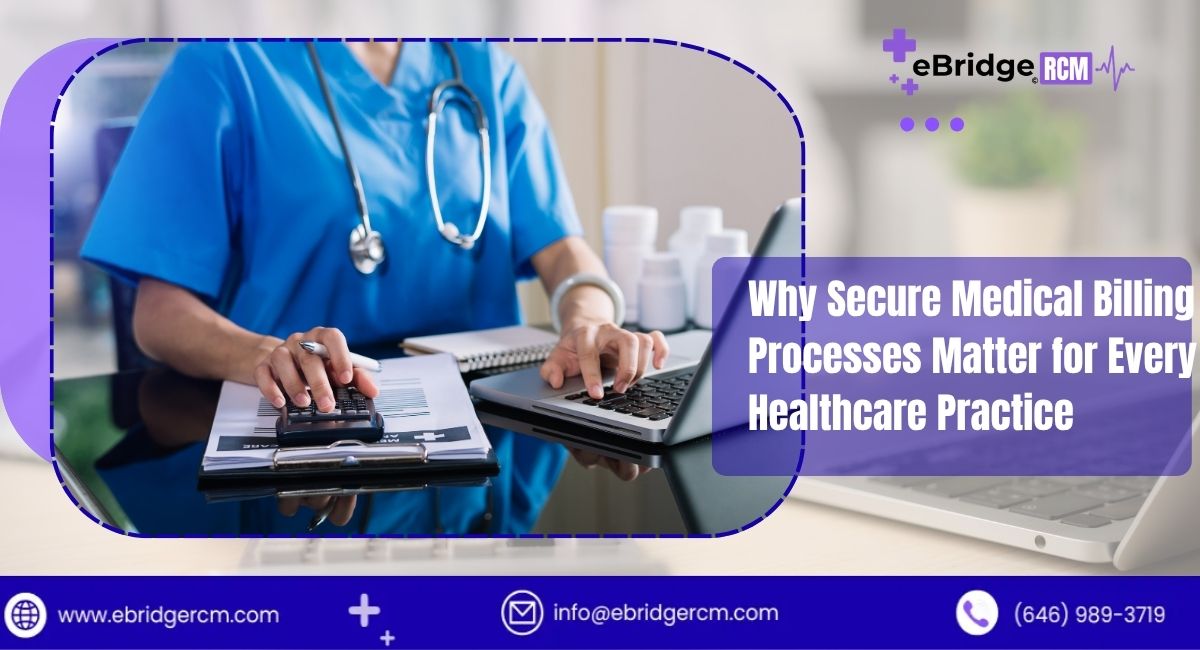
For healthcare practices of all sizes, secure medical billing is no longer optional. It is a fundamental requirement for protecting patients, maintaining compliance, ensuring financial stability, and supporting long-term growth.
This article explains why secure medical billing matters, the risks associated with weak billing security, and the practical steps every healthcare organization can take to strengthen its processes.
What Is Secure Medical Billing?
Secure medical billing refers to the policies, technologies, procedures, and training practices used to protect patient and financial information throughout the revenue cycle.
A secure billing environment safeguards data during:
- Patient registration
- Insurance verification
- Claims creation
- Claim submission
- Payment posting
- Denial management
- Reporting and auditing
- Data storage and transmission
Security extends beyond software alone. Even the most advanced billing platform can become vulnerable if staff members lack training or if workflows fail to follow proper compliance standards.
A truly secure billing process combines:
- HIPAA compliance
- Access controls
- Encryption technologies
- Secure clearinghouse connections
- Staff education
- Vendor oversight
- Routine audits
- Incident response planning
When these elements work together, healthcare practices can significantly reduce exposure to operational and financial risks.
Why Healthcare Billing Is a Prime Target for Cyber Threats
Healthcare billing systems contain valuable information that cybercriminals actively seek.
Unlike a stolen credit card, which can be canceled quickly, medical records contain long-term personal identifiers that may be exploited for years. These records often include:
- Full names
- Addresses
- Dates of birth
- Insurance details
- Social Security numbers
- Medical histories
- Payment information
Because of this value, attackers frequently target healthcare organizations through phishing attacks, ransomware campaigns, credential theft, and unauthorized system access.
Many smaller practices assume they are unlikely targets. In reality, cybercriminals often view smaller healthcare organizations as easier entry points because they may lack dedicated security resources.
A weakness in the billing process can provide access to large volumes of patient data, making billing operations a critical security focus.
The Financial Consequences of Poor Billing Security
Security incidents rarely affect only technology systems. They often create serious financial consequences.
Revenue Disruption
When billing systems become unavailable due to cyberattacks or system failures, claims processing may stop completely.
This can lead to:
- Delayed reimbursements
- Increased accounts receivable
- Cash flow challenges
- Staff productivity losses
Even short interruptions can affect practice profitability.
Compliance Penalties
Healthcare organizations must comply with HIPAA requirements regarding protected health information.
Failure to implement appropriate safeguards can result in:
- Regulatory investigations
- Corrective action plans
- Financial penalties
- Legal expenses
Recovery Costs
After a breach, organizations often face expenses related to:
- Forensic investigations
- Security upgrades
- Patient notifications
- Legal consultation
- Public relations support
- System restoration
These costs frequently exceed the expense of preventive security investments.
How Secure Medical Billing Protects Patient Trust
Trust is one of the most valuable assets a healthcare practice can possess.
Patients share sensitive information because they believe providers will protect it responsibly. When that trust is broken, recovery becomes difficult.
A security incident may cause patients to question:
- Whether their information is safe
- Whether the practice follows proper procedures
- Whether future interactions will remain confidential
Strong billing security demonstrates a commitment to privacy and professionalism.
Patients may never see the technical safeguards operating behind the scenes, but they benefit directly from the protection those safeguards provide.
The Role of HIPAA in Medical Billing Security
The Health Insurance Portability and Accountability Act, commonly known as HIPAA, establishes standards for protecting patient information.
Medical billing teams routinely interact with protected health information, making compliance a core security requirement.
HIPAA security measures include:
- Administrative safeguards
- Physical safeguards
- Technical safeguards
Examples include:
| HIPAA Requirement | Security Purpose |
| Access Controls | Limit unauthorized access |
| Audit Logs | Track user activity |
| Encryption | Protect transmitted data |
| Workforce Training | Reduce human error |
| Risk Assessments | Identify vulnerabilities |
Practices that integrate HIPAA requirements into daily billing workflows create stronger operational protection and reduce compliance risks.
For organizations reviewing broader compliance strategies, resources discussing medical billing compliance and HIPAA security often highlight the importance of continuous monitoring rather than one-time implementation efforts.
Why Clearinghouse Protection Matters
A clearinghouse acts as a critical intermediary between healthcare providers and insurance payers.
Claims travel through clearinghouses before reaching insurers, making these systems essential components of the revenue cycle.
Because clearinghouses process large volumes of sensitive information, security standards must remain exceptionally strong.
Key Security Features of a Secure Clearinghouse
A secure clearinghouse should provide:
- Data encryption
- User authentication controls
- Audit tracking
- Secure file transfer protocols
- Continuous monitoring
- Compliance documentation
Healthcare practices should regularly evaluate vendors and ensure contractual agreements clearly define security responsibilities.
Organizations seeking stronger electronic claim protection often rely on specialized clearinghouse services such as EDI Clearinghouse Solutions to improve security and claim transmission reliability.
Common Security Risks in Medical Billing Operations
Understanding risk is the first step toward prevention.
Weak Password Practices
Simple passwords remain one of the most common security weaknesses.
Employees who reuse passwords across systems increase exposure significantly.
Unsecured Remote Access
Remote work environments can introduce vulnerabilities when secure access controls are not properly implemented.
Phishing Attacks
Billing personnel frequently receive emails containing invoices, payer communications, and document requests.
Cybercriminals exploit this activity through phishing campaigns designed to steal credentials.
Inadequate User Permissions
Not every employee needs access to every record.
Excessive permissions increase the likelihood of accidental or intentional misuse.
Outdated Software
Older billing systems may contain vulnerabilities that attackers can exploit.
Regular updates and patch management help reduce exposure.
The Importance of Staff Training in Billing Security
Technology alone cannot prevent every security incident.
Human behavior remains one of the largest factors affecting healthcare cybersecurity.
Staff members should receive ongoing education regarding:
- HIPAA requirements
- Phishing awareness
- Password security
- Device protection
- Secure communication practices
- Incident reporting procedures
Training should occur regularly rather than only during onboarding.
Real-World Example
Consider a billing specialist who receives an email appearing to come from an insurance payer.
Without training, the employee might click a malicious attachment and unknowingly provide attackers with network access.
With proper training, the employee recognizes warning signs, reports the message, and prevents a potentially costly incident.
Continuous workforce education creates a stronger security culture throughout the organization.
How EHR and Billing Integration Affect Security
Healthcare organizations increasingly rely on integrated technology ecosystems.
Billing software often exchanges information with:
- EHR systems
- Practice management platforms
- Scheduling tools
- Payment systems
- Reporting solutions
Integration improves efficiency but also increases security complexity.
Every connection represents a potential risk if not properly managed.
Practices should evaluate:
- Encryption standards
- Authentication methods
- Vendor security certifications
- Access controls
- Data transmission protocols
Organizations exploring system connectivity often review guidance related to EHR Integration Services and broader integration security practices to reduce operational vulnerabilities.
The Business Benefits of Secure Medical Billing
Security investments support more than compliance.
They also create measurable business advantages.
Improved Revenue Cycle Performance
Secure systems experience fewer disruptions.
This allows claims to move efficiently through the reimbursement process.
Reduced Operational Risk
Strong controls lower the likelihood of security incidents and financial losses.
Better Vendor Relationships
Payers, clearinghouses, and technology providers increasingly expect strong security practices from healthcare partners.
Enhanced Reputation
Patients and business partners value organizations that prioritize data protection.
Greater Scalability
Secure processes provide a stronger foundation for growth.
As patient volumes increase, well-designed security frameworks support expansion without introducing unnecessary risk.
Outsourcing Benefits for Billing Security
Many healthcare practices struggle to maintain advanced security programs internally.
Limited resources, staffing challenges, and technology costs can make comprehensive protection difficult.
This is one reason many organizations consider outsourced billing support.
Access to Specialized Expertise
Experienced billing partners often employ dedicated compliance and security professionals.
These teams monitor evolving regulations, cybersecurity threats, and industry best practices.
Advanced Technology Infrastructure
Established billing companies frequently invest in:
- Enterprise-grade security tools
- Secure cloud environments
- Continuous monitoring
- Backup systems
- Disaster recovery planning
Reduced Administrative Burden
Outsourcing allows providers to focus more attention on patient care while experienced specialists manage billing operations.
Practices evaluating external support frequently compare in-house operations against professional solutions such as Medical Billing Services to improve both efficiency and security.
For additional perspective, many healthcare leaders also review resources discussing the hidden costs of managing billing internally and the advantages of outsourced revenue cycle management.
Building a Secure Medical Billing Framework
Effective billing security requires a structured approach.
Step 1: Conduct Risk Assessments
Regular assessments help identify:
- Technology weaknesses
- Workflow vulnerabilities
- Vendor risks
- Compliance gaps
Step 2: Strengthen Access Controls
Implement:
- Multi-factor authentication
- Role-based permissions
- Account monitoring
- User activity logging
Step 3: Encrypt Sensitive Data
Encryption protects information both:
- At rest
- In transit
Step 4: Monitor System Activity
Audit logs help identify unusual behavior before it becomes a major incident.
Step 5: Create Incident Response Procedures
Every practice should maintain documented procedures covering:
- Threat identification
- Containment
- Investigation
- Recovery
- Communication
Step 6: Review Vendors Regularly
Security responsibilities extend beyond internal systems.
Third-party vendors should undergo routine evaluation and oversight.
Security Best Practices for Small and Mid-Sized Practices
Smaller organizations often assume strong security requires large budgets.
Many effective measures are affordable and practical.
Recommended actions include:
- Enable multi-factor authentication.
- Train staff quarterly.
- Update software consistently.
- Restrict unnecessary access.
- Back up critical data regularly.
- Monitor system activity.
- Use secure clearinghouse partners.
- Conduct annual risk assessments.
- Document security policies.
- Evaluate outsourcing opportunities.
These steps create meaningful protection without overwhelming internal resources.
Security and Revenue Cycle Management
Revenue cycle performance depends heavily on data integrity and operational reliability.
Security failures can affect:
- Claims accuracy
- Eligibility verification
- Payment posting
- Denial management
- Reporting quality
Organizations that strengthen billing security often improve operational consistency as well.
Practices seeking broader revenue optimization frequently review resources addressing:
- Revenue Cycle Challenges and Solutions
- Benefits of Outsourcing RCM vs In House Billing
- Why HIPAA IT Security Matters for Your Revenue Cycle
- Medical Billing Compliance Checklist
Security Technologies Shaping Modern Medical Billing
Healthcare billing security continues to evolve.
Several technologies now play important roles in protecting sensitive information.
| Technology | Security Benefit |
| Multi-Factor Authentication | Prevents unauthorized access |
| Cloud Security Controls | Enhances infrastructure protection |
| Data Encryption | Secures transmitted information |
| Security Information and Event Management Systems | Improves monitoring |
| Endpoint Detection Tools | Identifies suspicious activity |
| Automated Audit Logs | Supports compliance oversight |
Major healthcare technology providers increasingly integrate these capabilities directly into billing and practice management platforms.
Frequently Asked Questions
What is secure medical billing?
Secure medical billing refers to the processes, technologies, and safeguards used to protect patient and financial information throughout healthcare billing operations.
Why is billing security important in healthcare?
Billing systems contain sensitive patient data and financial information. Strong security helps prevent breaches, compliance violations, revenue disruptions, and reputational damage.
How does HIPAA affect medical billing?
HIPAA requires healthcare organizations to implement safeguards that protect patient information. Billing teams must follow these requirements whenever they access, transmit, or store protected health information.
What role does a clearinghouse play in billing security?
A clearinghouse securely transfers claims between providers and insurance payers. Strong clearinghouse protection helps reduce risks associated with data transmission.
Can outsourcing improve billing security?
Yes. Reputable billing partners often provide specialized security expertise, advanced infrastructure, compliance support, and continuous monitoring that may be difficult for smaller practices to maintain internally.
How often should staff receive security training?
Most healthcare organizations benefit from ongoing education throughout the year, including onboarding training, periodic refreshers, phishing awareness exercises, and policy updates.
Final Words
Secure medical billing is about far more than technology. It is a comprehensive strategy that protects patient information, strengthens compliance, supports financial performance, and preserves trust.
As healthcare organizations become increasingly dependent on digital systems, the importance of billing security continues to grow. Every claim, payment transaction, eligibility check, and data transfer represents a responsibility to safeguard sensitive information.
Practices that invest in staff training, clearinghouse protection, secure technology infrastructure, routine audits, and strong vendor oversight place themselves in a stronger position to reduce risk and improve operational resilience.
For organizations seeking professional support with secure billing operations, revenue cycle management, compliance oversight, clearinghouse integration, and specialty billing services, eBridge RCM LLC provides solutions designed to help healthcare practices strengthen both security and financial performance.